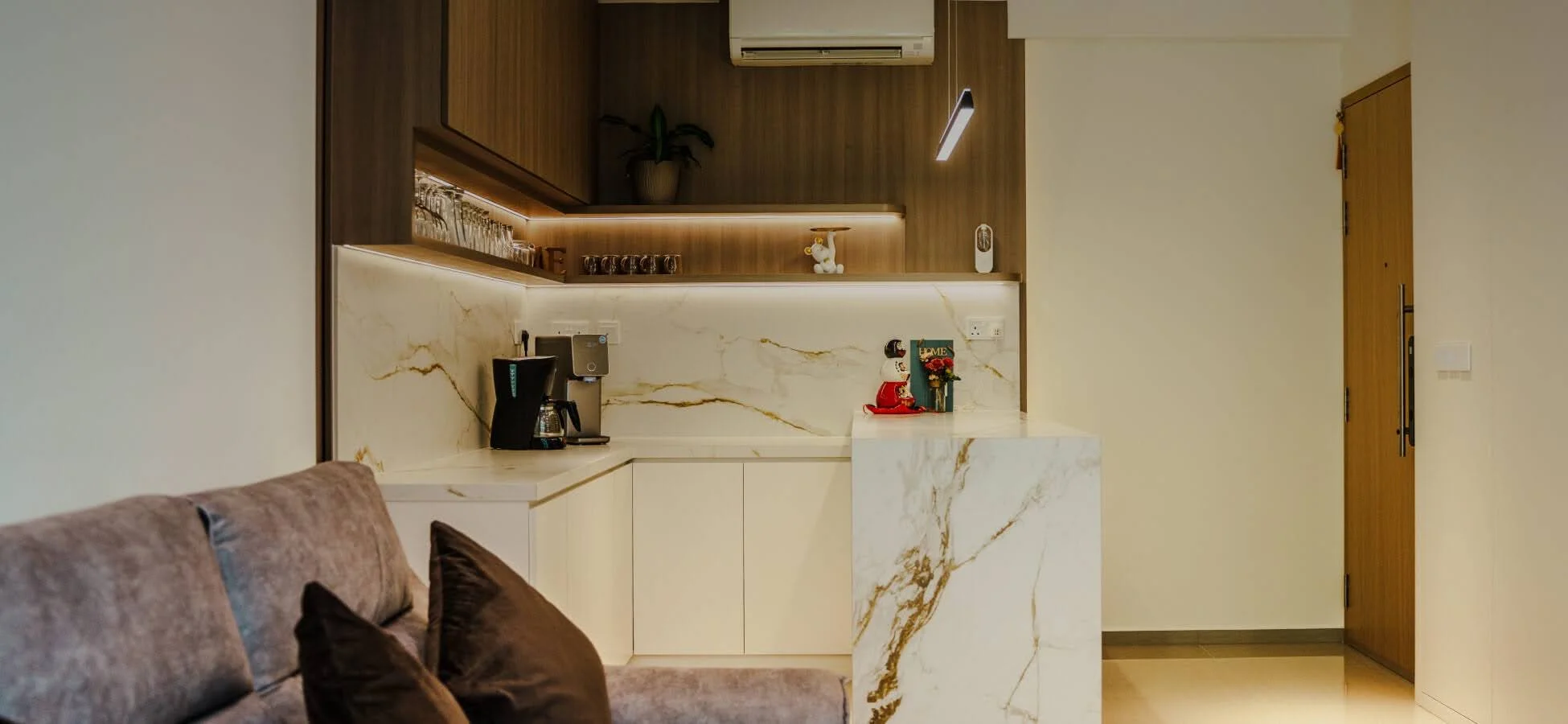
Renovating a home in Singapore is a major project. Whether it is a new BTO flat, resale HDB, condominium or landed property, the right renovation team can make the process considerably easier to manage.
But how can homeowners tell which home renovation services in Singapore are actually suitable for their project?
The answer is not simply to choose the company with the lowest quotation or the most attractive showroom. A good renovation service should combine appropriate experience, transparent pricing, practical design, reliable project management and an understanding of the requirements that apply to the property.
For homeowners comparing renovation companies in Singapore, the following factors can help narrow down the options.
What Should Homeowners Look for in a Renovation Company?
The best renovation service for one homeowner may not be the right choice for another. A small HDB renovation, for example, has very different requirements from a complete landed property renovation.
A company that can coordinate design, renovation works and project management under one service can also make communication simpler, particularly for larger projects.
1. Check Experience With the Type of Property
One of the first questions to ask is whether a renovation company has completed projects similar to the property being renovated.
HDB and BTO Renovation
HDB flats often require careful space planning because homeowners are working within a relatively fixed layout. Storage, kitchen design, lighting and multipurpose areas can therefore have a significant impact on the finished home.
For BTO homeowners, the renovation may focus on creating a personalised interior from a relatively new starting point. Resale HDB owners may have additional considerations such as existing flooring, built-ins, plumbing, electrical systems or previous renovation work.
HDB also has specific renovation requirements. Homeowners are required to engage contractors listed in the Directory of Renovation Contractors (DRC) for HDB renovation works. Certain works, including some demolition or hacking, require prior HDB approval.
This makes familiarity with HDB renovation procedures an important factor when choosing a contractor.
Condominium Renovation
Condominium projects can involve another set of considerations. Besides the homeowner’s requirements, renovation works may need to follow the development’s management rules.
A renovation company experienced with condominium projects should therefore be familiar with coordinating work schedules, deliveries, materials and site access while working within the property’s requirements.
Landed Property Renovation
Landed homes can involve much broader renovation scopes, particularly where homeowners are considering major alterations, extensive carpentry, structural work or a complete redesign.
For these projects, homeowners may benefit from working with a renovation team that can coordinate multiple aspects of the project rather than treating each part as a separate job.
2. Look Beyond the Renovation Package Price
One of the most common mistakes when comparing renovation services is looking only at the headline price.
Two renovation quotations may appear similar while covering very different scopes of work.
A proper quotation should make it reasonably clear what is included, such as:
- Demolition or hacking
- Flooring
- Painting
- Electrical works
- Plumbing
- Carpentry
- Kitchen fittings
- Bathroom fittings
- Lighting
- Appliances, where applicable
- Design services
- Project management
- Cleaning and handover
Homeowners should also ask what is excluded.
A low initial quotation can become considerably more expensive if important works, materials or installation costs are not included in the original scope.
3. Compare Renovation Services, Not Just Renovation Companies
Searching for a renovation contractor in Singapore can produce many different types of businesses.
Some specialise mainly in construction and renovation works. Others focus more heavily on interior design. Some provide an integrated design-and-build approach.
The right option depends on the project.
For example, a homeowner who already has a completed design may primarily need a reliable contractor. Someone starting from an empty floor plan may prefer a service that combines interior design and renovation.
An integrated approach can be useful when homeowners want one team to coordinate the design, material selection, construction and final handover.
4. Review Previous Projects Carefully
A portfolio can reveal much more than a list of services.
Instead of looking only at attractive photographs, homeowners should examine whether a company’s previous projects demonstrate experience with:
- Similar property sizes
- Similar layouts
- Comparable design styles
- Practical storage solutions
- Kitchen and bathroom renovations
- Custom carpentry
- Lighting design
- Space optimisation
It is also useful to ask how recently the projects were completed and whether the examples represent the company’s typical work.
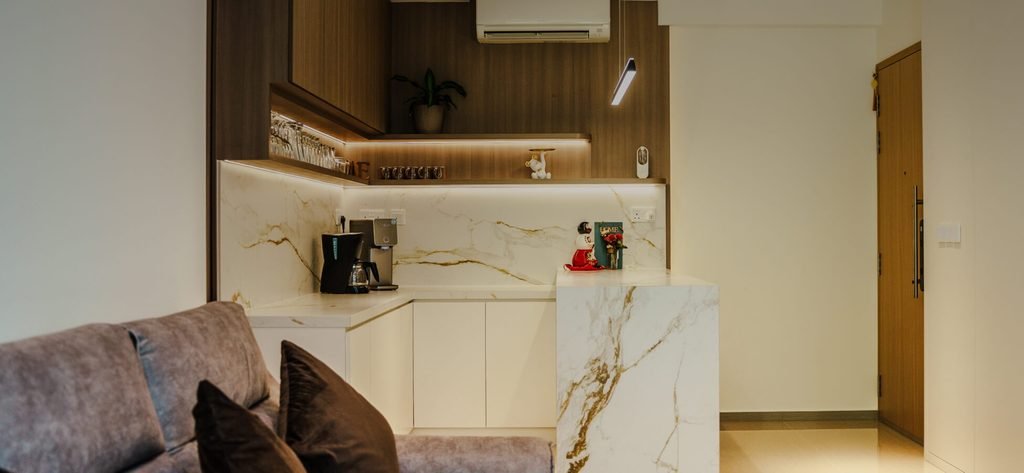
A beautiful photograph is useful for judging design style, but it does not necessarily tell a homeowner about workmanship, communication or project management.
5. Ask How the Renovation Process Works
A clear renovation process can reduce uncertainty once work begins.
Homeowners should ask what happens after the initial consultation.
A typical process may include:
Consultation → Site assessment → Space planning → Design proposal → Quotation → Material selection → Renovation → Inspection → Handover
The exact process will vary between companies, but homeowners should understand who is responsible for each stage.
For example, who manages subcontractors? Who communicates schedule changes? Who checks the workmanship? Who handles defects after handover?
These questions become particularly important for larger home renovation projects in Singapore.
6. Check Whether the Design Is Practical
Good interior design is not only about appearance.
A renovation should work for the people living in the home.
For a compact HDB flat, this might mean maximising storage without making rooms feel crowded. In a larger condominium, it could involve creating better connections between living and dining areas. For a landed property, the focus might be on improving circulation across multiple floors.
Before approving a design, homeowners should consider how they will actually use the space.
Questions worth asking include:
- Is there enough storage?
- Is the kitchen practical for everyday cooking?
- Are electrical points located where they are needed?
- Does the lighting suit different activities?
- Is there enough space around furniture?
- Are materials suitable for the room?
- Will the design still work as the household’s needs change?
The most successful renovation is usually one that combines visual appeal with everyday functionality.
7. Understand Singapore’s Renovation Requirements
Regulations should be considered before renovation begins, rather than after problems arise.
For HDB flats, HDB requires homeowners to engage contractors listed in its Directory of Renovation Contractors. HDB also states that some renovation works require approval, and unauthorised demolition or hacking can affect structural safety.
Electrical work also has specific requirements. HDB advises homeowners to engage an EMA-licensed electrical worker for electrical works, while certain air-conditioning installations require appropriately trained professionals.
This is one reason local experience matters when selecting home renovation services in Singapore.
A renovation team should be able to explain which parts of a proposed project require approvals, permits or qualified professionals.
8. Ask About Communication and Project Updates
Renovation projects involve many moving parts, so communication can have a major effect on the homeowner’s experience.
Before signing an agreement, ask:
- Who will be the main point of contact?
- How often will progress updates be provided?
- How are changes to the design handled?
- What happens if materials become unavailable?
- How are defects reported?
- Who coordinates subcontractors?
Regular communication does not guarantee that every renovation will run perfectly, but it can make unexpected issues much easier to manage.
9. Consider Whether a Full-Service Renovation Approach Makes Sense
For homeowners who want design and renovation handled together, a full-service interior design and renovation company may be worth considering.
This approach can bring several parts of the project under one team, including space planning, design development, material selection, carpentry and renovation management.
For example, Singapore-based companies such as Homescape provide interior design and home renovation services for BTO flats, resale HDBs, condominiums and landed properties. Its service model combines design development with renovation management, giving homeowners an option to work with one team across multiple stages of the project.
The important point is not whether a full-service model is automatically better. It is whether it matches the homeowner’s preferred way of managing the renovation.
10. Read the Contract Before Starting Work
Before renovation begins, homeowners should understand exactly what they are agreeing to.
The contract should clearly cover the scope of work, pricing, payment schedule, materials, estimated timeline and responsibilities of each party.
Any changes made after the agreement should also be documented.
HDB notes that renovation arrangements between homeowners and contractors are private contracts, and disputes concerning matters such as pricing, schedule or workmanship need to be addressed between the parties.
For that reason, homeowners should avoid relying solely on verbal promises.
Questions to Ask Before Hiring Home Renovation Services in Singapore
Before making a decision, homeowners can ask the following:
Is the contractor experienced with my property type?
Experience with HDB, condominium and landed projects can vary considerably.
Is the quotation itemised?
A detailed quotation makes it easier to understand what is included and compare different proposals.
Who manages the renovation?
Knowing the project manager or main contact can prevent communication gaps.
Are the necessary permits or approvals included in the process?
For HDB renovations in particular, homeowners should understand which works require approval.
Can I see completed projects?
Previous work can provide useful evidence of design and workmanship.
What happens if something needs to be changed?
Ask how variations, additional costs and changes to materials are handled.
What happens after the renovation is completed?
Clarify defect reporting, warranty coverage and post-renovation support.
Ultimately, the best home renovation services in Singapore are not necessarily the ones with the lowest starting price or the most impressive showroom. They are the services that can clearly demonstrate how they will turn a homeowner’s requirements into a practical, well-managed renovation.
Our Recommendation Based on Research
To move from general advice to a practical suggestion, we compared Homescape against the same criteria this guide recommends homeowners use. Those criteria come from official guidance and publicly available business information.
Homescape Pte. Ltd. is an interior design and home renovation company in Singapore. The company cites over 30 years of industry experience and says it has served more than 500 clients across BTO flats, resale HDBs, condominiums, landed homes and commercial spaces. Its design-and-build model combines in-house designers and contractors, 3D design previews, weekly renovation updates and a warranty that includes a lifetime warranty on cabinetry hardware. The company operates from Ang Mo Kio in Singapore, with a fabrication factory in Loyang and an office in Kuching, Sarawak. Homeowners can book a free consultation through its website.
Scope of services. The company works on BTO flats, resale HDBs, condominiums, landed homes and commercial spaces, and its range of interior design and home renovation services are set out on its website. This matters because, as covered earlier, each property type has different requirements.
Process and communication. Homescape describes a five-step journey: a discovery meeting, a proposed layout with a preliminary quotation, design work with 3D renderings, renovation, then move-in. It also says each client gets one dedicated consultant and weekly progress updates. This addresses the questions about a main point of contact and regular updates raised earlier.
Control over workmanship. Renovation works are done by its own in-house team, and it operates its own fabrication factory in Singapore. In-house teams can mean fewer handoffs between subcontractors, though homeowners should still ask who supervises each trade.
After-care. Homescape offers a warranty after handover, including a lifetime warranty on cabinetry hardware. Homeowners should ask for the written terms and exclusions.
Who this may suit. Based on this research, Homescape appears well matched to homeowners who want one team to handle design, construction and handover, and who value scheduled updates and a single point of contact.
Company Details
If you’re planning your next home transformation, you can reach out to them for a consultation and quotation:
Homescape Pte. Ltd. (Singapore)
🌐 Website: https://www.homescape.com.sg/
📧 Email: hello@homescape.com.sg
📞 Phone: +65 8882 9283
📍 Location: 3, Ang Mo Kio Street 62, #01-19, Link @ AMK, Singapore 569139