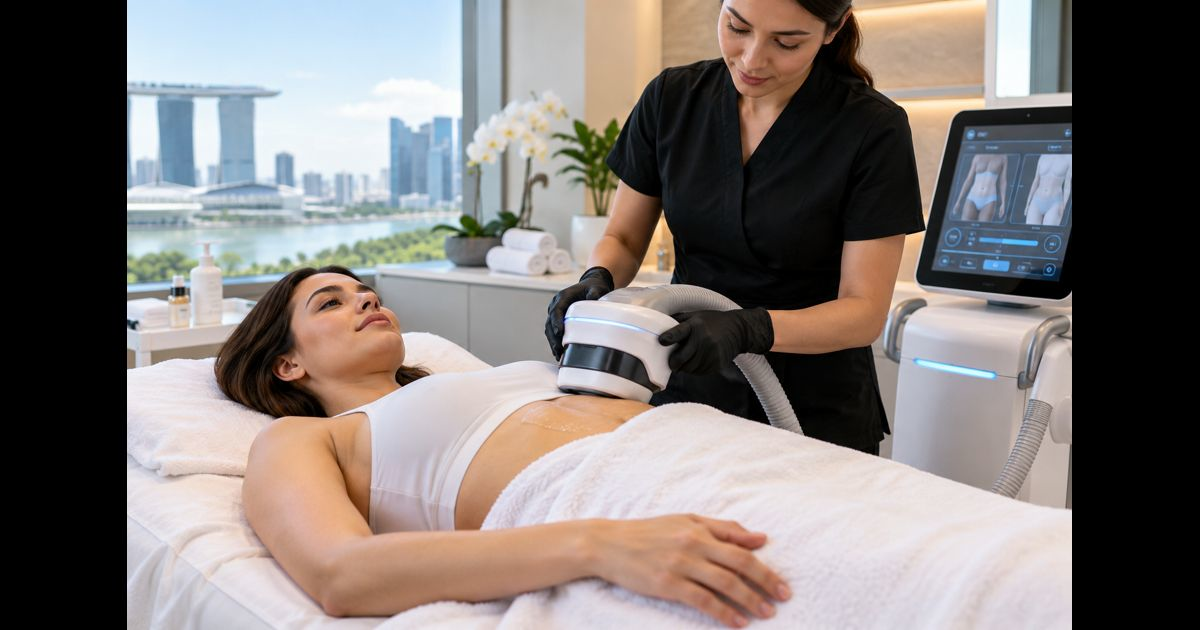
There’s one question most people have about non-invasive body shaping: “Does this work, or is it marketing?” It’s a fair question, since this category gets oversold constantly. The honest answer is that it can work, but only for the right kind of problem, and only when the technology, the area, and your expectations line up.
It isn’t a substitute for weight loss, and results vary from person to person. A lot depends on whether the treatment matches the area you want to fix. Get that right, and many people leave sessions with a tighter, more shaped look in under an hour, then go straight back to their day. That combination of low commitment and real results is a big part of why body contouring treatment appeals to people who never wanted surgery in the first place.
What Is a Non-Invasive Body Shaping Procedure?
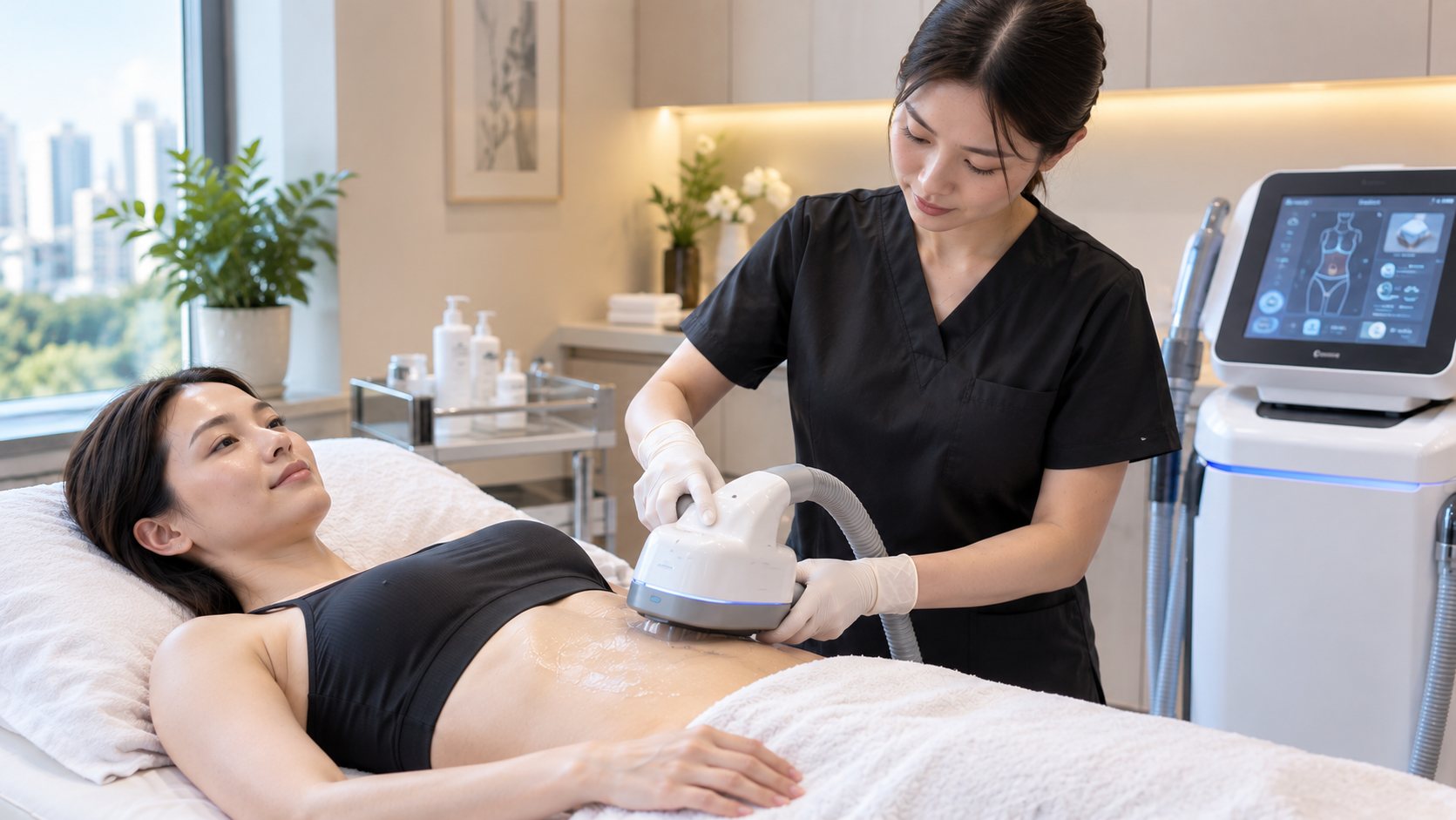
A non-invasive body shaping procedure, often used interchangeably with the term body contouring (the industry hasn’t fully standardised these terms), is any treatment that reshapes an area of your body without cutting, needles, or anaesthesia. Nothing gets removed from your body during the session itself. Instead, most of these treatments use targeted energy to gently affect fat cells from the outside, and your body clears out the affected cells on its own over time.
This is different from weight loss. Stepping on a scale won’t show much change after a session like this, and that’s expected, not a sign it failed. The goal isn’t fewer pounds. It’s a different shape in one specific area, often a spot that hasn’t responded well to diet or exercise.
It’s also different from surgery. A surgeon physically removes fat or skin during liposuction or a tummy tuck. With non-invasive treatments, nothing gets removed with a blade, which is a large part of why there’s little to no downtime involved.
Types of Non-Invasive Body Shaping Treatments
So how does body contouring work? Common non-invasive body-contouring technologies include fat freezing, heat-based (radiofrequency) treatments, and focused ultrasound, along with muscle-stimulation devices that work toward a different goal entirely. Most of the fat-targeting technologies aim to trigger fat cell death so the body can clear the cells naturally, though the exact mechanism, depth, and settings vary by device.
Fat Freezing (Cryolipolysis)
Fat freezing works because fat cells are more sensitive to cold than the skin and muscle around them. During treatment, a device cools the targeted area to a specific temperature. This is understood to trigger apoptosis, a controlled, natural form of cell death, in the fat cells, distinct from injury or trauma. The full biological response develops over weeks rather than just the following hours or days, and your body gradually clears the affected cells the way it clears other cellular waste.
Heat-Based Treatments (Radiofrequency)
Heat-based treatments use warmth instead of cold, though how they’re delivered varies by device. Generally, the skin surface is kept around 40°C to 43°C to avoid burns, while the fat layer underneath needs to reach a higher temperature, commonly cited around 45°C to 47°C, to trigger fat cell death. The exact numbers depend on the specific technology and device used, so treat any single figure as an example rather than a universal standard. Some radiofrequency devices also affect collagen, the protein that keeps skin firm, which is why certain RF treatments are chosen when skin tightening matters as much as fat reduction.
Focused Ultrasound (HIFU)
Focused ultrasound uses sound waves, and heat can play a role too, depending on the system. Different HIFU devices operate at different depths, temperatures, and treatment protocols, so there isn’t one universal specification across all systems. Some technologies rely mainly on a thermal effect, while others add a mechanical effect on the tissue as well. Because of this variation, HIFU is often chosen for tighter, more targeted areas where precision matters, but the specifics should come from the device and specialist you’re considering.
These treatments are designed for localised body contouring rather than meaningful overall weight loss, and what changes is the shape of the treated area over the weeks and months that follow. There isn’t one universal best body contouring treatment either, since the right technology depends on your specific area, goals, and skin condition, something worth confirming with a specialist.
Who Might Be a Good Candidate for Non-Invasive Body Contouring?
There’s no single universal eligibility rule that applies across every technology, since suitability depends on the specific treatment, the treatment area, your fat distribution and skin condition, your medical history, and what results you’re expecting. That said, a specialist will generally be assessing for things like these:
Often a good fit:
- Close to a stable, healthy weight, with localised areas that haven’t responded well to diet or exercise
- Skin condition and elasticity appropriate for the specific technology being considered (this varies significantly by device)
- In good general health, with realistic expectations for gradual, modest results
Situations that need extra care or a different approach:
- Significant excess weight overall, since these treatments target specific areas rather than large-scale fat loss
- More significant skin laxity, which some technologies handle better than others
- A pacemaker, defibrillator, or certain other implanted devices, since some technologies (particularly radiofrequency) can interfere with them
- Pregnancy or breastfeeding
A proper consultation is the only reliable way to know where you land, since a specialist can assess your specific areas, skin, and health history in a way no article can replace.
Benefits of Non-Invasive Body Shaping
Beyond skipping surgery altogether, these fat reduction treatments offer a few real advantages worth knowing before you book anything:
- No anaesthesia or hospital stay. There’s no cutting and no general anaesthesia to plan around, which avoids that particular category of surgical risk.
- Short sessions. Many treatments take 30 minutes to an hour, depending on the area and technology. A lot of people book one during a lunch break and go straight back to their day.
- Generally fewer procedural risks than surgery, though not risk-free. Without an incision, there’s nothing for infections or anaesthesia complications to attach to directly. That said, each technology carries its own possible side effects, covered honestly in the next section.
- Gradual, natural-looking results. Your body clears the affected fat cells over time rather than overnight, so changes tend to show up slowly rather than all at once.
Is It Safe? Risks and Side Effects
For most people, the side effects that do occur with non-invasive body contouring procedures are mild, though severity and duration can vary depending on the specific treatment.
During a session, it’s normal to feel pulling, tugging, or intense cold or heat, depending on the technology. Afterwards, the treated area may look red or swollen, and it can feel sore, a bit like the ache you get after a hard workout. Some people also notice mild bruising or temporary numbness. Most of this clears up within a few days to a week, though individual recovery varies.
There’s one rare complication worth knowing about directly: paradoxical adipose hyperplasia, or PAH, a recognised rare complication specifically associated with cryolipolysis (fat freezing), where the treated area develops more fat tissue instead of less, essentially the opposite of the intended effect. Published incidence rates vary meaningfully between studies, from well under 1% to under 1 in 100 in some series, depending on how the studies define and detect it, so it’s genuinely rare but not a single settled statistic. When it happens, it typically becomes visually apparent gradually, commonly cited as 2 to 6 months after treatment. Management is case-dependent; some cases are monitored over time, and more significant cases may eventually be addressed surgically, often with liposuction, sometimes after waiting several more months for the affected tissue to soften, once a specialist has properly evaluated it.
Choosing a qualified, experienced specialist reduces avoidable risks through proper screening, technique, and follow-up, though no specialist can fully guarantee against rare complications like this one. Bringing it up here isn’t meant to alarm you, just to give you the full picture before you book anything.
Downtime and Recovery: What to Expect
There’s no real recovery period to plan around for most non-invasive treatments, but there is a results timeline worth understanding, and it varies more by technology than people expect:
- Activity resumes quickly. No incisions or stitches are involved, and many people return to work or errands the same day, though individual reactions vary.
- Mild, short-lived after-effects. Some tenderness or swelling in the treated area for a day or two, similar to what’s covered in the safety section above.
- Results take time, and the exact window depends on the technology. Some people notice early changes within a few weeks, with fuller results developing gradually over one to three months or longer, depending on the treatment.
- Session spacing also depends on the technology. Fat-freezing treatments like cryolipolysis typically need about 4 to 8 weeks between sessions on the same area, to let your body finish clearing the affected tissue. Other technologies, including some muscle-focused treatments, may be scheduled closer together, often around 1 to 2 weeks apart. Your specialist will set a schedule based on the specific device and area being treated.
The one mindset shift worth making going in: this is a gradual process spread out over weeks or months, not a one-time fix you’ll see the moment you leave the clinic.
How Much Does Non-Invasive Body Shaping Cost in Singapore?
Cost varies significantly by technology, treatment area, and number of sessions needed, so it’s worth breaking down by treatment type rather than looking for one number:
- Fat freezing (cryolipolysis) generally runs $450 to $900 per cycle in Singapore, depending on the device and treatment area. Since most areas need more than one cycle, a single area often totals somewhere in the $600 to $1,500 range.
- Radiofrequency treatments typically cost less per session, generally $300 to $700, though pricing widens considerably for more advanced or combined systems.
- HIFU tends to sit at the higher end, generally $800 to $1,500 per session, reflecting the more advanced technology and deeper treatment depth.
- Combination packages, where a clinic bundles two or more treatments together, are often priced between $450 and $1,200 per session and can work out cheaper overall than booking each treatment separately.
- Location and experience level. Clinics in central districts and more experienced specialists tend to sit toward the higher end of these ranges. Cost alone isn’t a reliable indicator of quality, and it’s worth asking directly what a lower or higher price reflects rather than assuming.
These are general Singapore market ranges, not fixed quotes. Since your actual price depends on the treatment area, the specific device a clinic uses, and how many sessions your plan involves, the only way to get a number you can rely on is a proper consultation. At a non-invasive aesthetic clinic in Singapore, a specialist can walk you through your options for non-surgical fat reduction and give you an honest, up-to-date view of pricing.
Body Contouring vs. Body Sculpting vs. Body Toning: What’s the Difference?
These three terms get used interchangeably online, and that’s a fair mix-up, since the industry hasn’t settled on strict, universally agreed definitions. Think of the table below as a general, commonly used way to distinguish them, not a fixed industry standard:
| Term | Main Goal | Common Methods | Best For |
| Body Contouring | Reduce and reshape stubborn fat | Cryolipolysis, radiofrequency, HIFU, among others | Fat pockets that haven’t responded well to diet or exercise |
| Body Sculpting | Broad term covering fat reduction, muscle definition, or both | Varies widely by clinic and device | People wanting a combination of fat loss and more visible muscle shape |
| Muscle Toning | Improve muscle firmness and definition specifically | Commonly electromagnetic muscle stimulation, among other approaches | People near their goal weight who want firmer-looking muscle rather than fat loss |
The simplest way to think about it: contouring generally leans toward fat, toning generally leans toward muscle, and sculpting is the broadest term, capable of meaning either or both depending on which clinic or device is using it. If a specialist says “body sculpting” without specifying which, it’s worth asking directly whether they mean fat reduction, a body toning treatment, or a combination of the two.
Treatment suitability, technology choice, and expected outcomes should always be assessed by a qualified aesthetic professional rather than determined on your own.
Conclusion
A non-invasive body shaping procedure isn’t a miracle fix, and it isn’t right for every body type or goal. But for the right candidate, with realistic expectations going in, it can genuinely deliver a tighter, more defined shape, without surgery, without weeks of recovery, and with minimal, generally manageable risk, though not risk-free.
Outcomes depend on more than just the specialist; your anatomy, the technology used, and your own expectations all play a role, but working with someone who properly matches the technology to your specific problem area meaningfully improves your odds of a result you’re happy with.
Find the Right Fit With Skin Creations
If you’re weighing whether non-invasive body shaping is right for you, Skin Creations can help you work through that with a proper look at your specific area and goals, rather than a guess based on an article. They’re a non-invasive aesthetic clinic in Singapore offering treatments including CurveLift Sculpting Treatment and Non-Surgical Body Contouring, with plans built around an assessment rather than a one-size approach.
Contact info:
Email: office@skincreationsg.com
Phone: +65 98321709 | +65 90178905
Locations:
- City Gate Outlet: 371 Beach Rd, B1-09/10, Singapore 199597 (Mon to Sun, 11 am to 8 pm)
- Centrepoint Mall Outlet, Orchard Road: 176 Orchard Road, #02-21, Singapore 238843 (Mon to Sun, 11 am to 8 pm)