
Finding the best renovation contractor in Singapore is not about the lowest quote. It is about who protects your deposit, sticks to the budget and builds what you approved.
Singapore has hundreds of renovation firms. Many look the same online. Most homeowners only notice the difference once work starts, when a delay or surprise bill lands.
This guide shows what separates a good contractor from a risky one. It also looks at one studio as a worked example of what to look for.
What Makes a Renovation Contractor the Best in Singapore?
The best contractors share six traits. Use them as your checklist before you sign anything.
1. HDB licence: Only HDB-licensed contractors can carry out works in HDB flats. Check the firm on the HDB directory before your first meeting.
2. CaseTrust accreditation: CaseTrust protects your deposit and holds the firm to fair contract terms. It also gives you a formal route if a dispute comes up.
3. An in-house build team: Many firms design in-house but outsource the build. Each handoff adds cost, delay and room for blame.
4. Itemised quotations: A good quote lists every item, size and material. A lump sum per room hides where your money goes.
5. Clear visuals before works start: 3D or VR renders let you check layouts and finishes early. Changes on paper cost nothing. Changes on site cost a lot.
6. A written warranty: Look for at least 12 months of workmanship cover, handled by the same team that built your home.
A Studio That Meets Every Standard: The I-Plan Studio™
One firm that meets all six standards is The I-Plan Studio, a Singapore renovation contractor founded in 2019. It handles HDB, condo, landed and commercial projects from its showroom at Cendex Centre on Lower Delta Road.
Licensed, accredited and certified
The studio is HDB-licensed, CaseTrust-accredited, and bizSAFE-certified. Homeowners get deposit protection, fair contract terms and safe site practice from day one.
Design and build under one roof
Its designers work side by side with in-house tilers, carpenters and general works technicians. These trades drive most renovation costs and most site problems. Keeping them in-house means faster fixes and no blame-shifting between parties.
720VR walkthroughs before any work begins
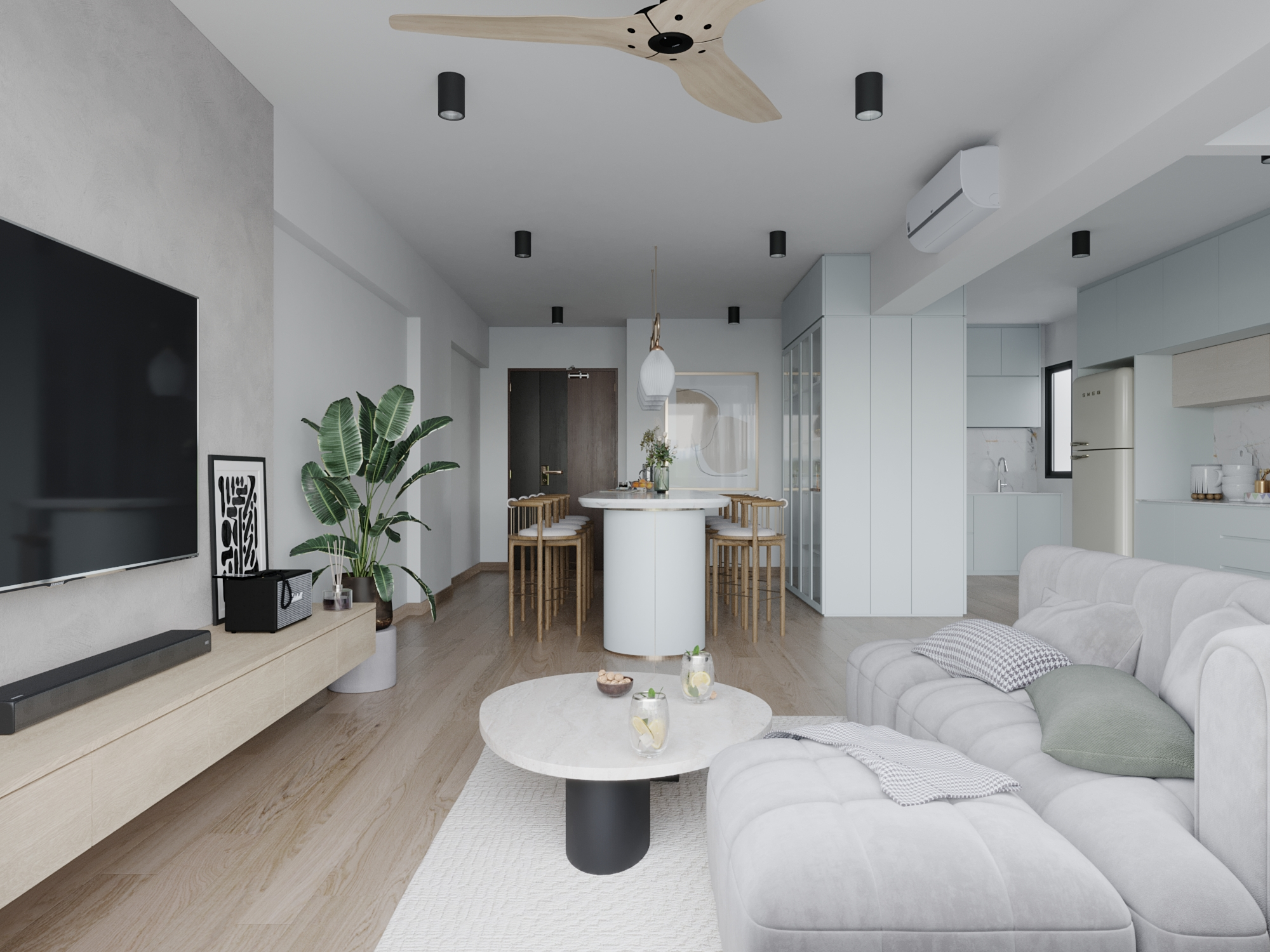
Every project starts with a full 720VR walkthrough of the planned home. Clients can swap tiles and laminates, check lighting moods and test cabinet options in the same view. The studio reports up to 95% render-to-reality accuracy, and its Google reviews often mention how close the finished home looked to the render.
Itemised quotes and written approvals
Clients receive a line-item quotation before they commit. Any change to scope or cost needs written approval first. Projects run on six milestones, each signed off by the homeowner.
Aftercare that continues after handover
Each project comes with a 12-month in-house workmanship warranty. The same team that built the home handles touch-ups.
Best for:
BTO owners, resale HDB buyers and condo owners who want a clear budget and want to see their home before it is built. Their completed HDB renovations show how closely the finished homes match the renders.
Which Questions Should You Ask Before Signing?
Ask every firm on your shortlist the same questions. Their answers will tell you more than their portfolio.
• Are you HDB-licensed and CaseTrust accredited?
• Which trades are in-house, and which do you subcontract?
• Can I see an itemised quotation before I pay a deposit?
• Will I see 3D or VR visuals before works begin?
• How are changes to scope or cost approved?
• What is the timeline, and is it agreed in writing?
• What does your warranty cover, and who handles defects?
• Can I visit a completed project or speak to a past client?
Red Flags That Signal The Wrong Contractor
Walk away if you spot any of these early on.
• A large deposit with no CaseTrust cover: Your money has no formal protection if the firm folds.
• Lump-sum quotes: “Kitchen: $12,000” tells you nothing about what you are paying for.
• Verbal promises: If a change, timeline or warranty is not in writing, it does not exist.
• Pressure to sign today: Limited-time discounts push you past proper checks.
• No visuals before works: Without renders, you only see your home once it is too late to change.
• Vague answers about who builds: If the firm cannot name its tradespeople, it is likely outsourcing everything.
Finding The Right Renovation Partner For Your Home
The best renovation contractor in Singapore removes guesswork. Look for licences, CaseTrust cover, an in-house team, itemised quotes, clear visuals and a written warranty.
Shortlist two or three firms and ask each the same questions. The right contractor will answer every one clearly, in writing, before you pay a deposit.
The I-Plan Studio™ Pte. Ltd. (Singapore)
🌐 Website: https://theiplanstudio.com/
📧 Email: sales@theiplanstudio.com
📞 Phone: +65 6530 3003
📍 Location: 120 Lower Delta Rd, #02-15/16 Cendex Centre, Singapore 169208
Frequently Asked Questions
How much does a renovation cost in Singapore?
A new BTO flat typically costs $36,000 to $76,000 to renovate. Resale HDB flats often run from $51,000 to $90,000 or more, because they need hacking, rewiring and waterproofing. Condos and landed homes cost more again, depending on size and scope.
How long does an HDB renovation take?
Most HDB renovations take 10 to 14 weeks once works start. Condos usually take 12 to 16 weeks. Start planning 4 to 6 months before key collection to leave time for design and permits.
Is an interior designer the same as a renovation contractor?
Not always. An interior designer plans the space, while a contractor builds it. Many firms only design and outsource the build, so it pays to ask who does the actual work.
Why does CaseTrust matter when choosing a contractor?
CaseTrust is run by the Consumers Association of Singapore. It protects your deposit, sets fair contract terms and gives you a way to resolve disputes. Most renovation complaints involve firms without it.
When can renovation works take place?
Under HDB’s renovation guidelines, general works can run from 9 am to 6 pm on weekdays and Saturdays. No works are allowed on Sundays or public holidays. Noisy works such as hacking are limited to 9 am to 5 pm on weekdays. Condos set their own hours through the MCST, so check the house rules before you plan your timeline.
How should renovation payments be structured?
Pay in stages, not in one lump sum. A fair schedule ties each payment to a completed milestone, such as demolition, carpentry or handover. Hold the final payment until all defects are fixed. With a CaseTrust-accredited firm, your deposit is also protected if the firm closes.